

A Las Vegas hotel can share responsibility for an excursion injury in some circumstances, but not automatically. Liability depends on who operated the tour, what the hotel said or did when it sold the booking, and what actually caused the injury. Because many hotel-booked tours run through separate companies, more than one party is often involved.
The personal injury lawyers in Las Vegas at Cogburn Davidson handle injuries tied to hotels, casinos, and tourist activities. Partner Hunter Davidson represents people seriously hurt in premises liability matters, including multiple seven-figure settlements, and frequently appears before the Nevada Supreme Court. This article explains the legal questions that tend to shape excursion injury claims.
Who Is Responsible When You're Injured on a Tour Booked Through Your Hotel?
Responsibility for a hotel-booked tour injury can rest with the tour operator, the hotel, or other parties, depending on the facts. Under general negligence principles, an injured person must show that someone owed a duty of care, breached it, and caused damages.
Nevada applies an ordinary negligence standard to recreational activities, as the Nevada Supreme Court explained in Auckenthaler v. Grundmeyer, 110 Nev. 682 (1994).
Several parties may be examined in an excursion injury claim, including:
- The tour operator, which usually controls the vehicles, equipment, guides, and safety rules
- The hotel or resort, if its own conduct contributed to the harm
- An equipment maker, if a defective product played a role
- A landowner or land manager responsible for the condition of the site
- Another driver or third party who caused a crash during transport
Identifying each party matters because Nevada's comparative negligence statute, NRS 41.141, generally makes a defendant responsible only for the share of fault a jury assigns to it, subject to statutory exceptions. A claim that overlooks a responsible party may leave part of the fault unaccounted for.
When Can a Las Vegas Hotel Be Held Liable for an Excursion Injury?
A Las Vegas hotel can be held liable for an excursion injury when its own conduct, or the conduct of someone the law treats as its agent, contributed to the harm. Selling a ticket at a concierge desk does not settle the question in either direction. Courts look closely at the relationship between the hotel and the operator.
Theories that injured guests sometimes raise include:
- Ostensible agency: Legal references, such as Cornell's Legal Information Institute, describe this as a situation in which a business suggests that an independent contractor works for it, or fails to correct that impression, and may then be responsible for the contractor's actions.
- Negligent selection or oversight: A claim may argue that the hotel knew or should have known that an operator engaged in unsafe practices and continued to promote it anyway.
- Misleading safety representations: Booking pages, brochures, or staff statements about safety or experience can become part of the dispute.
- Hotel-controlled property or transportation: If the injury happened on hotel grounds or in a hotel-operated vehicle, ordinary premises or transportation principles may apply.
Hotels often respond that the operator is an independent business and that the guest's agreement was with that company. How the booking was presented, whose name appeared on confirmations and receipts, and what disclosures were made can all matter. Outcomes vary, and none of these theories succeeds automatically.
Common Excursions Booked From Las Vegas Hotels and How Injuries Happen
Hotel concierge desks and booking pages commonly sell several types of excursions, and each carries its own injury patterns. The table below summarizes how injuries can happen and which facts often matter in a claim.
| Excursion Type | How Injuries Can Happen | Facts That Often Matter |
| Helicopter and airplane tours | Hard landings, mechanical problems, pilot error, weather-related incidents | Operator certification, maintenance and training records, flight data |
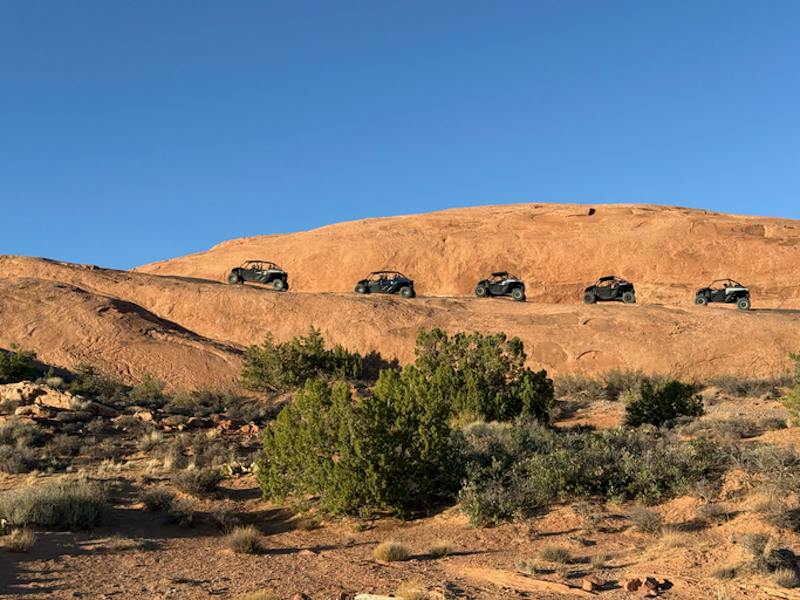
| Off-road ATV and UTV tours | Rollovers, collisions, ejections, inadequate protective gear | Vehicle condition, rider instruction, helmets and restraints, route choice |
| Bus, van, and shuttle tours | Collisions, sudden stops, falls while boarding | Driver conduct, vehicle maintenance, crash reports |
| Boat, kayak, and water outings | Falls overboard, equipment failure, collisions, heat exposure | Life jackets, supervision, weather decisions |
| Zipline and adventure courses | Harness or cable failure, falls, collisions at landing platforms | Inspection records, staff training, equipment age |
| Hiking and canyon tours | Falls, heat illness, flash flooding, vehicle transfer crashes | Guide experience, weather monitoring, water and emergency plans |
Air tours show how oversight can differ by activity. Federal regulations at 14 CFR Part 136 set safety standards for commercial air tours and include special operating rules for Grand Canyon National Park. Other excursions may be shaped mainly by state negligence law, operator policies, and site requirements, which vary from one company to the next.
I Signed a Waiver. Can I Still File a Claim in Nevada?
Signing a waiver does not automatically end a claim in Nevada, but it can matter a great deal. A waiver is a contract, and courts look at what the document says, who it covers, and what kind of conduct caused the injury. The result depends on the specific document and the facts.
The Nevada Supreme Court held in Mizushima v. Sunset Ranch, Inc., 103 Nev. 259, 737 P.2d 1158 (1987), that Nevada's comparative negligence statute absorbed implied assumption of risk, with an express agreement to assume risk remaining as the exception. In practice, the wording of a signed document is closely scrutinized, while arguments that a guest simply "knew the risks" are generally weighed as comparative fault under NRS 41.141.
Questions that often arise when a waiver is reviewed include:
- Does the document clearly address negligence, or does it only describe general risks of the activity?
- Who is released: the operator, the hotel, or both?
- What was the guest told and shown when the document was presented?
- Does the claim involve conduct beyond ordinary carelessness, which can raise separate legal questions?
- Does the waiver name the hotel, an equipment maker, or other third parties at all?
A waiver issued by an operator may not extend to every other party involved, and each document must be read on its own terms.
What If the Accident Happened Outside Nevada?
An excursion that starts at a Las Vegas hotel can end in another state, such as a tour into Arizona, and the location of the injury can affect which state's law applies.
In tort cases, the Nevada Supreme Court has held that the "most significant relationship" test from the Restatement (Second) of Conflict of Laws section 145 generally governs, as explained in General Motors Corp. v. Eighth Judicial District Court, 122 Nev. 466, 134 P.3d 111 (2006).
That analysis looks at where the injury occurred, where the conduct causing it took place, where the parties live or do business, and where their relationship is centered.
A booking made at a Las Vegas hotel with a Nevada-based operator may point toward Nevada, while an injury in another state may point elsewhere. States also differ on deadlines and fault rules, so the answer depends on the individual case.
Can You File a Claim After You've Flown Home?
Visitors injured in Las Vegas can often pursue a claim after returning home, but deadlines still apply, and practical challenges arise.
Nevada's general deadline for personal injury lawsuits is two years under NRS 11.190(4)(e), which covers actions for injuries to a person caused by another's wrongful act or neglect. Other states, or other types of claims, may have different deadlines.
Several practical issues tend to come up for out-of-state visitors:
- Evidence such as video, maintenance logs, and booking records can be lost or overwritten if it is not preserved promptly
- Medical records from doctors at home are part of the documentation of the injury
- Where a lawsuit can be filed depends on jurisdiction and venue rules, which turn on where the companies operate and where events occurred
- Insurance coverage for tour operators varies, and identifying it early helps frame the claim
Distance does not remove a visitor's rights, but it can make early organization more important.
What to Do After You're Hurt on a Las Vegas Tour
Prompt, careful steps after a tour injury can protect both health and documentation. The steps below are general guidance and do not replace advice about a specific situation.
- Step 1: Get medical care and follow up, and tell providers exactly how the injury happened.
- Step 2: Report the incident to the tour operator, request a written incident report, and inform the hotel desk that made the booking of what happened.
- Step 3: Photograph the scene, equipment, vehicles, and injuries, and keep the booking confirmation, receipts, brochures, and screenshots of the listing.
- Step 4: Collect names and contact details for guides, staff, other guests, and any witnesses.
- Step 5: Keep a copy of any waiver or form you signed, or note that you were never given one.
- Step 6: Be cautious with recorded statements to insurers and with social media posts about the incident.
- Step 7: Track medical bills, missed work, and symptoms, and keep the two-year Nevada deadline in mind.
Why Choose Cogburn Davidson for an Excursion Injury Claim in Las Vegas?
Excursion injury cases can involve several companies, out-of-state evidence, and signed documents, which is why the details matter. Jamie Cogburn is one of only 19 Nevada attorneys certified in personal injury, a member of the Multi-Million Dollar Advocates Forum, and the 2023 president of the Nevada Justice Association. Cogburn Davidson has recovered more than $250 million for clients over two decades and approaches every personal injury case with the mindset that it may go to trial.
Clients have rated the firm 4.9 stars across more than 500 reviews. Past results do not guarantee a similar outcome in any other case. To discuss what happened on your tour, call the Las Vegas office at (702) 805-3275 at any hour to schedule a case evaluation with Cogburn Davidson.
Sources
- Nevada Revised Statutes, NRS 41.141, comparative negligence
- Nevada Revised Statutes, NRS 11.190, periods of limitation
- Auckenthaler v. Grundmeyer, 110 Nev. 682, 877 P.2d 1039 (1994)
- Mizushima v. Sunset Ranch, Inc., 103 Nev. 259, 737 P.2d 1158 (1987)
- General Motors Corp. v. Eighth Judicial District Court, 122 Nev. 466, 134 P.3d 111 (2006)
- Electronic Code of Federal Regulations,14 CFR Part 136, commercial air tours
- Cornell Legal Information Institute, Negligence and Ostensible Agent
Disclaimer: This article is for informational purposes only and does not constitute legal advice. Every case is different, and the law is extremely nuanced, so each situation must be evaluated individually based on its specific facts.