Translate icon
Give Cogburn Davidson a phone call at (702) 805-0652
Translate icon

Workplace Injuries Across Nevada’s Hospitality Industry

A Nevada Supreme Court decision involving a Harrah's houseperson recounts an earlier case, Mirage v. Cotton, which recognized a premises-related exception to the going-and-coming rule. An employee injured on the employer's premises while proceeding to or from work within a reasonable time before or after a shift may be entitled to workers' compensation. The employee in that earlier case tripped on a curb while walking from the employer's parking lot to the entrance, about 10 minutes before her shift.

Workers' compensation is generally the exclusive remedy against an employer, but hospitality workplaces involve many companies and many people. The work injury lawyer in Las Vegas page explains how workers' compensation and third-party claims differ. This page addresses issues specific to hotels, casinos, and restaurants.
Why Choose Cogburn Davidson for a Hospitality Worker Injury Case in Las Vegas?

Cogburn Davidson is a Las Vegas firm whose practice includes casino and hotel injuries and premises liability, giving the team familiarity with the properties and operations that define the local hospitality industry. Attorney Yolanda Carapia serves on the Nevada State Bar's Editorial Board and its Character and Fitness Committee.

The firm's results include a $2.3 million slip-and-fall recovery. That outcome reflects its own facts and does not predict the result of any other case.

What Accidents Commonly Injure Hotel, Casino, and Restaurant Employees?

Hotel, casino, and restaurant employees face a mix of lifting, slipping, burning, and cutting hazards.
According to Nevada data on injury and illness rates from the Bureau of Labor Statistics survey, casino hotels recorded 4.4 total recordable cases per 100 full-time workers in 2024, compared with 3.0 for private industry overall.

Accidents that commonly arise in these workplaces include the following:

  • Housekeeping injuries from heavy lifting, bending, and moving carts
  • Kitchen burns and cuts from hot surfaces, fryers, knives, and slicers
  • Slips and falls on wet, greasy, or cluttered floors
  • Injuries from dishwashers, ovens, laundry machinery, and other back-of-house equipment
  • Incidents in loading, delivery, and storage areas

Equipment-related injuries may raise additional questions. The machinery and defective equipment injuries page discusses claims against equipment manufacturers and other third parties.

How Does Employee Status Change the Legal Picture?

An injured person's status as an employee, rather than a guest or patron, can change the legal path available after an accident.

In the same decision involving a Harrah's employee, the Nevada Supreme Court observed that the exclusive remedy provision cannot bar a guest or patron from suing in court for negligence under analogous facts, whereas it limits an employee's remedy to workers' compensation.

That distinction explains why two people hurt by the same hazard in the same building may have different options. Whether a particular hazard injured an employee in the course of employment, or a guest in another capacity, depends on the facts.

Logo media

Can an Injury Caused by a Guest, Vendor, or Contractor Support a Separate Claim?

An injury caused by a guest, a vendor, or a contractor may support a claim beyond workers' compensation, depending on the circumstances. Under NRS 616C.215, an injured employee may take proceedings against a person other than the employer or a person in the same employ.

Large resort properties often host independent vendors, contractors, and leased concessions. A worker hurt by a vendor's equipment, a contractor's unsafe work area, or a hazard created by a separate company may have a third-party claim against that company.

Banner media

How Can Tips and Wages Affect Benefits?

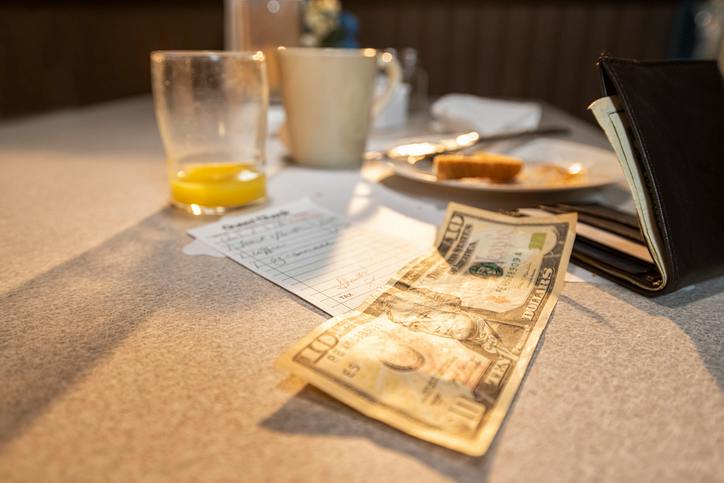
Tips and wages can affect the benefits an injured hospitality worker receives. Under NRS 616A.065, the definition of wage is increased by tips an employee reports to the employer under federal law, except for tips in a form other than cash and cash tips totaling less than $20 per month.

The statute also sets an upper limit on the average monthly wage, tied to 150 percent of the state average weekly wage multiplied by 4.33. Because the calculation depends on reported amounts, accurate reporting and records of earnings can matter for tipped workers.

A tip on a table

Why Are Hospitality Injury Claims Often Disputed?

Hospitality injury claims are often disputed because insurers may question whether the injury arose out of employment.

According to the Nevada Supreme Court, an employee must show a causal connection between the injury and the nature of the work or workplace, and the court has described three kinds of risk:

  • Employment risks
  • Personal risks
  • Neutral risks, which may qualify if the employment exposed the worker to a greater risk than the general public

Documentation can help address these disputes. The following steps may be useful for hospitality workers.

  • Report the incident to a supervisor in writing as soon as practicable
  • Photograph the hazard, such as a wet floor, damaged equipment, or blocked walkway
  • Write down the names of coworkers, guests, or vendors who saw the incident
  • Keep records of schedules, wages, and reported tips

Are Injuries in Employee-Only Areas Treated Differently?

Injuries in employee-only areas, such as back-of-house corridors, time clock areas, and employee parking garages, often raise questions about when the course of employment begins.

In the Harrah's decision, the employee had parked in the employee-only garage and was waiting in line for his keys and radio when the problem arose. The court found the course-of-employment element satisfied even though he had not clocked in.

The court explained that the course of employment does not require the employee to be actively performing job duties. Each situation still depends on its own facts, including the time, the location, and the reason the employee was there.

Logo media

Why Hire a Hospitality Injury Lawyer in Las Vegas?

A hospitality injury lawyer in Las Vegas can help evaluate whether a claim involves the employer, a guest, a vendor, or a contractor, and how those claims interact. Employers and insurers in the hospitality industry are often experienced in disputing the work connection of an injury, and an injured worker may benefit from an advocate who can organize the evidence.

Banner media
Black and white picture of Jamie and Hunter

We’re Here to Help After a Hospitality Workplace Injury in Las Vegas

Hotel, casino, and restaurant employees face distinct hazards, and the legal options depend on who caused the injury and how the claim is documented. Jamie Cogburn supports Las Vegas community organizations including Three Square Food Bank, the Boys and Girls Club, and Give to Learn, and the firm has spent nearly two decades representing injured Nevadans.

Injured workers can speak with the Las Vegas hospitality injury attorneys at Cogburn Davidson to schedule a case evaluation. The firm has offices at 2300 W Sahara Ave, Suite 800-816, Las Vegas, NV 89102, and 2580 St Rose Pkwy, Suite 330, Henderson, NV 89074. Call (702) 805-0652 to get started.

Available 24/7 Tell Us What's Going On

Discuss your case with us today at no cost.

(702) 805-0652
This field is required.
Send Us a Message
Accessibility: If you are vision-impaired or have some other impairment covered by the Americans with Disabilities Act or a similar law, and you wish to discuss potential accommodations related to using this website, please contact our Accessibility Manager at (702) 745-5359.
Contact Us