

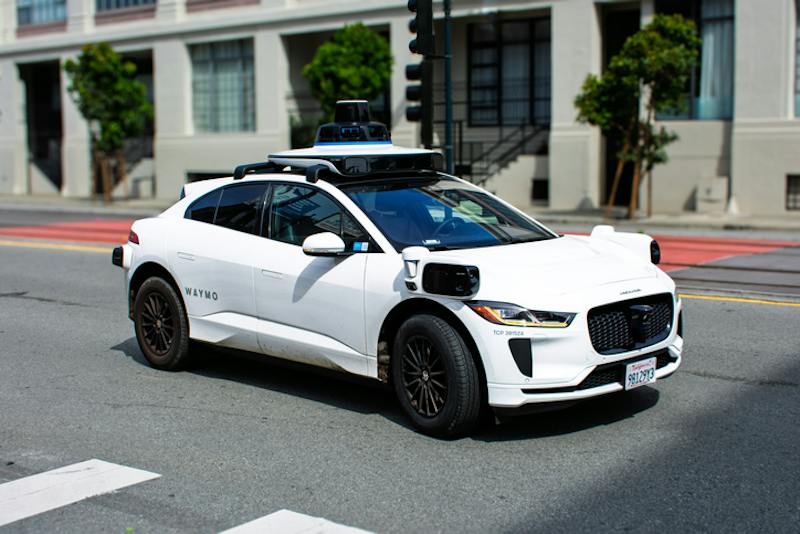
Waymo, Tesla, and Zoox are all now operating or testing driverless vehicles on the streets of Las Vegas, and Uber has partnered with Waymo to bring robotaxis into its app in other markets. When one of these vehicles crashes, liability usually runs through the company operating the fleet, the manufacturer of the vehicle or its automated driving system, or both, depending on what actually failed.
Jamie Cogburn, one of only 19 Nevada attorneys certified as a Personal Injury Specialist by the State Bar of Nevada, has spent nearly two decades building cases against corporations that would rather blame a machine than accept responsibility. Cogburn Davidson Car Accident & Personal Injury Lawyers has recovered more than $250 million for injured clients throughout Las Vegas and Henderson, and this guide explains how liability works when a robotaxi is involved.
Who Is Liable When a Driverless Car Crashes in Nevada?
Nevada's general negligence statute still governs these crashes. Under NRS 41.130, whoever causes an injury through a wrongful act, neglect, or default is liable for the resulting damages.
The trouble with a driverless vehicle is that there's no individual driver to point to. Instead, fault typically traces back to one or more of the following:
- The company operating the robotaxi fleet (Waymo, Tesla, or Zoox), if its dispatch, remote monitoring, or maintenance practices contributed to the crash
- The manufacturer of the vehicle or its automated driving system, if a hardware or software defect caused the failure
- A human driver in another vehicle, if ordinary driver error or a traffic violation caused the collision
- A rideshare partner like Uber, in markets where it books rides through a partnered autonomous fleet
Because these vehicles log continuous sensor and telemetry data, investigating which of these parties actually caused the crash often depends on pulling that data before it can be altered or lost.
Are Robotaxis Legal in Las Vegas, and How Are They Regulated?
Robotaxis are legal in Las Vegas under NRS Chapter 482A, Nevada's autonomous vehicle statute. Before testing an autonomous vehicle on Nevada highways, a company must submit proof of insurance or a bond of at least $5 million under NRS 482A.060.
Companies must also meet vehicle safety requirements under NRS 482A.070 and NRS 482A.080, which require an autonomous vehicle to have:
- A means to engage and disengage the automated driving system that's easily accessible to any human operator on board
- An indicator inside the vehicle showing when the automated driving system is actively operating it
- A means to alert the human operator to take manual control if the automated driving system fails
- The ability to reach a minimal risk condition, such as coming to a complete stop, if it's a fully autonomous vehicle operating without a human operator present
Waymo has already launched a fully driverless, rider-only service in Las Vegas, and the Nevada Transportation Authority approved a permit allowing Waymo to operate up to 1,000 autonomous vehicles in Clark County, with Tesla and Uber also receiving permits from the same agency.
Zoox began operating a purpose-built robotaxi service in Las Vegas before Waymo's launch, and Nevada's DMV separately authorized Tesla to begin autonomous vehicle testing in the state.
Does Nevada Law Treat an Autonomous Vehicle Accident Differently Than a Regular Car Accident?
The underlying negligence standard doesn't change, but Nevada law does treat autonomous vehicles differently in two important ways.
First, under NRS 482A.200, a fully autonomous vehicle's automated driving system is legally deemed to fulfill the physical acts a human driver would otherwise be required to perform. In other words, Nevada law doesn't require a licensed human to be behind the wheel for the vehicle to be operating lawfully.
Second, NRS 482A.095 requires anyone testing an autonomous vehicle to report a crash to the Department of Motor Vehicles within 10 business days if it involves personal injury or more than $750 in property damage.
The National Highway Traffic Safety Administration separately collects nationwide crash data on automated vehicles through its Standing General Order on Crash Reporting, which can be a useful resource when investigating patterns of similar failures.
Can You Sue the Manufacturer, the Company, or Both After a Robotaxi Crash?
Nevada recognizes strict products liability, a doctrine the Nevada Supreme Court adopted in Shoshone Coca-Cola Bottling Co. v. Dolinski, which holds that a manufacturer can be held liable for a defect that existed when the product left its hands, without the injured person having to prove the manufacturer was negligent. That doctrine applies just as readily to a defective sensor, a flawed line of self-driving code, or a hardware failure in an automated driving system.
At the same time, NRS 482A.090 limits liability in a couple of specific circumstances:
- The original manufacturer of a vehicle later converted into an autonomous vehicle by a third party isn't liable for a defect caused by that conversion, unless the defect was already present in the vehicle as originally manufactured
- The original manufacturer or developer of an automated driving system later modified by an unauthorized third party isn't liable for a defect caused by that modification, unless the defect was already present in the system as originally developed
Hunter Davidson, who has argued before the Nevada Supreme Court on behalf of injury victims, understands how to sort through overlapping corporate structures to identify which company, or companies, actually bear responsibility.
What Should You Do If You're Hit by or Riding In a Driverless Car?
- Call 911 and get medical attention, even if injuries seem minor at first
- Get the crash documented in an official police report
- Photograph the vehicles, the scene, and any visible damage before anything is moved
- Ask the robotaxi company for a copy of the ride or trip record, and note the vehicle's identifying information
- Avoid giving a recorded statement to any company's insurance representative before speaking with an attorney
- Contact a personal injury attorney quickly, since vehicle telemetry and sensor data can be difficult to preserve once time passes
The Road Ahead for Autonomous Vehicle Claims in Las Vegas
Robotaxi litigation is still a developing area of Nevada law, and the companies involved have far more resources and data than an individual accident victim. Cogburn Davidson Car Accident & Personal Injury Lawyers has offices in Las Vegas and Henderson, is available 24/7, and holds a 4.9-star rating across more than 500 client reviews. If a Waymo, Tesla, or Uber-affiliated robotaxi has left you injured, the firm's attorneys can help identify every party who may be responsible and pursue the compensation state law allows. Contact us today to book your case evaluation and learn more.
Disclaimer: The information on this page is provided for general educational purposes only and does not constitute legal advice. Every case is different. Past results do not guarantee future outcomes.
Sources