

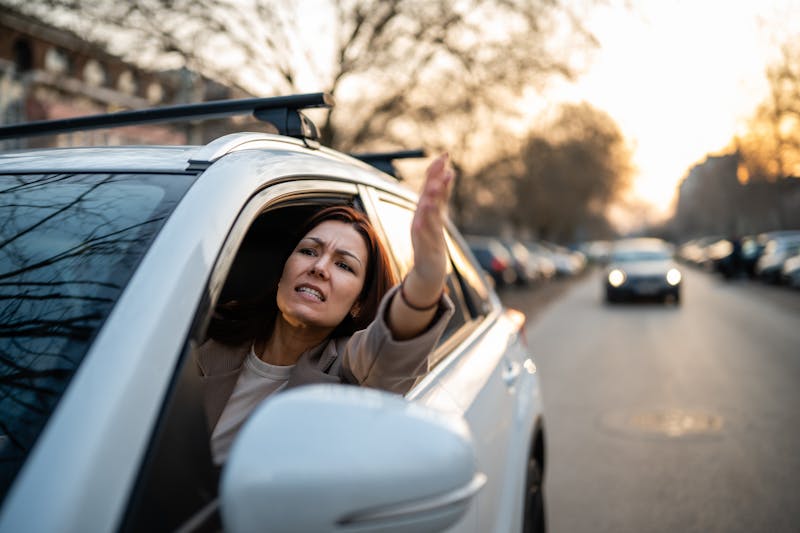
Yes, you can sue an aggressive driver in Nevada. Road rage is not simply reckless behavior that goes unpunished; it creates direct civil liability for every injury and loss it causes.
Depending on how the aggressor acted, a victim may have claims under both negligence and intentional tort law. In the most serious cases, courts may award punitive damages in addition to full compensation for medical bills, lost income, and pain and suffering.
Las Vegas roads are among the most heavily traveled in the country, and the combination of high traffic density, tourist congestion, and late-night activity makes the city a setting where aggressive driving incidents are both common and severe.
At Cogburn Davidson Car Accident & Personal Injury Lawyers, Jamie Cogburn and Hunter Davidson have spent nearly two decades holding dangerous drivers accountable for the harm they cause. Jamie Cogburn is one of only 19 attorneys in Nevada certified in personal injury, and the firm has recovered more than $250 million for injured clients in Las Vegas and Henderson.
If an aggressive driver injured you, this guide explains your rights, what your case may be worth, and how to move forward.
What Is Road Rage Under Nevada Law?
Road rage and aggressive driving are related but legally distinct concepts under Nevada law, and the distinction affects which statutes apply and how a civil case is framed.
Aggressive driving is a statutory violation under Nevada Revised Statutes Section 484B.653. A driver commits aggressive driving by committing two or more enumerated traffic violations simultaneously, or in close sequence, in a manner that poses an immediate hazard to another person.
Qualifying violations include:
- Following too closely
- Unsafe lane changes
- Passing on a shoulder
- Failing to yield the right of way
- Running red lights or stop signs
Reckless driving is defined under Nevada Revised Statutes Section 484B.600 as driving a vehicle in willful or wanton disregard for the safety of persons or property. This standard is more serious than ordinary negligence and sits a step below intentional conduct.
Road rage refers to intentional aggressive behavior directed at another driver or their vehicle. Nevada does not use the term "road rage" in its statutes, but the underlying conduct can trigger criminal charges and create independent civil liability.
Common road rage behaviors that give rise to civil claims include:
- Deliberately ramming or sideswiping another vehicle
- Brake-checking a driver following behind
- Forcing another vehicle off the road or into adjacent lanes
- Following and confronting a driver after a traffic dispute
- Using a vehicle as a weapon against a person or property
From a civil litigation standpoint, all three theories can support a personal injury lawsuit. The key variable is whether the aggressor's conduct was careless, reckless, or intentional, because each produces different legal consequences and potential damages.
Negligence, Recklessness, and Intentional Conduct: How the Legal Theory Affects Your Case
The legal theory that best fits the aggressor's conduct determines how the case is built, what damages are available, and how insurance responds. This comparison covers the three most common frameworks applied to road rage cases in Nevada.
| Legal Theory | How It Applies to Road Rage | Insurance Coverage | Punitive Damages | Standard of Proof |
| Negligence | Careless driving that caused harm; the driver failed to exercise reasonable care | Typically covered by the at-fault driver's liability policy | Not typically available | Preponderance of the evidence (more likely than not) |
| Recklessness/ Wanton conduct | Willful disregard for safety; more than carelessness but short of intent | Often covered; some policies may consent | Possible under NRS 42.005 | Preponderance of the evidence |
| Intentional tort (assault, battery) | Deliberate use of a vehicle to threaten or injure | May be excluded from liability coverage as an intentional act | Yes, if malice is established under NRS 42.005 | Preponderance of the evidence (civil standard) |
One critical implication: when a driver acts intentionally, their auto liability policy may exclude coverage for intentional acts. This does not leave victims without recourse. Your own uninsured motorist coverage can step in when the at-fault driver's policy does not respond, and the aggressor's personal assets remain reachable through a civil judgment.
Road Rage Behaviors That Can Support a Civil Lawsuit in Nevada
The following conduct regularly gives rise to personal injury claims in Nevada when it results in injury or property damage:
- Deliberately ramming or sideswiping another vehicle
- Forcing another vehicle off the road or into other lanes of traffic
- Aggressive brake-checking that causes a rear-end collision
- Cutting off another vehicle at dangerous speeds
- Blocking a vehicle from changing lanes or exiting a freeway
- Following a vehicle at unsafe distance to intimidate the driver
- Using a vehicle to pursue another driver
- Exiting a vehicle and physically assaulting a driver or passenger
- Firing a weapon from or at a vehicle in a road rage confrontation
According to a study by the AAA Foundation for Traffic Safety, nearly 80 percent of drivers in the United States admitted to expressing significant anger, aggression, or road rage behind the wheel at least once in the previous year. The study also found that approximately 8 million drivers engaged in extreme road rage behaviors, including purposely ramming another vehicle or exiting their car to confront a driver.
What You Need to Prove in a Nevada Road Rage Injury Claim
Regardless of whether the claim is framed in negligence or intentional tort, four elements must be established:
- Duty: Every driver on Nevada roads owes a legal duty to operate their vehicle with reasonable care for the safety of others.
- Breach: The aggressive driver violated that duty through careless, reckless, or intentional conduct.
- Causation: The breach directly caused the victim's injuries and losses.
- Damages: The victim suffered actual harm, including physical injuries, medical expenses, lost wages, or emotional distress.
In intentional tort cases, a fifth element applies: the aggressor must have acted with the intent to cause harmful or offensive contact, or with the intent to place the victim in reasonable apprehension of such contact.
What to Do After a Road Rage Accident in Nevada
The actions taken immediately after a road rage incident shape both the criminal investigation and the civil case. We suggest the following:
- Do not engage or confront the other driver: Move your vehicle to a safe location away from the aggressor if possible. Engaging escalates danger and can be used to argue that you provoked the incident.
- Call 911: Report the incident as a road rage or aggressive driving event. Request law enforcement and emergency medical services. A police report is foundational evidence for any civil claim.
- Describe the aggressor's vehicle and direction of travel: Provide the 911 dispatcher with the license plate number, make, model, color, and last known direction of travel. This increases the chance that police locate the driver before they leave the scene.
- Document everything from a safe location: Photograph all vehicle damage, your injuries, the crash scene, road conditions, and any skid marks or debris. If witnesses stop, capture their contact information.
- Get a medical evaluation that day: Adrenaline and shock suppress the perception of pain. A same-day medical record creates a direct link between the road rage incident and your injuries that insurers cannot easily challenge.
- Preserve any dashcam or phone footage: If your vehicle has a dashcam, secure the footage before it overwrites. If any bystander captured the incident on a phone, request a copy and their contact information.
- Notify your own insurance company, briefly: Report the crash promptly, but do not give a recorded statement or accept any offer before speaking with an attorney.
- Contact a personal injury attorney as soon as possible: Road rage cases can involve criminal proceedings running parallel to your civil claim. An attorney at Cogburn Davidson can coordinate both and ensure evidence is preserved before it disappears.
What Road Rage Cases Are Worth: Verdicts and Settlements
The value of a road rage case depends on the severity of the injuries, the clarity of the aggressor's conduct, and the coverage available. Cases involving intentional or grossly reckless conduct carry the potential for punitive damages, which can substantially increase the total recovery beyond what compensatory damages alone would provide.
Cogburn Davidson has secured the following results for car accident and negligence victims in Nevada:
| Amount | Case Type |
| $6.8 Million | Car Accident |
| $4.2 Million | Negligence |
| $3.7 Million | Car Accident |
| $2.4 Million | Car Accident |
| $2.4 Million | Truck Accident |
| $2.2 Million | Negligence |
Compensation in these cases covered emergency medical care, ongoing treatment, lost earnings, pain and suffering, and, in applicable cases, punitive damages for egregious conduct. The firm's trial-focused approach has consistently produced results that exceed what insurance companies offer to unrepresented victims.
How Personal Injury Attorneys Are Paid: Contingency Fees Explained
A contingency fee arrangement means the attorney receives a percentage of the compensation recovered, and nothing at all if no recovery is made. There is no retainer, no hourly billing, and no invoices to pay while your case is pending.
This structure exists precisely to make legal representation available to injury victims regardless of their financial situation. After a serious road rage accident, most people are managing medical bills and lost income; the last thing they should face is a legal bill on top of it.
At Cogburn Davidson:
- The initial consultation is always free
- No attorney fees are owed unless compensation is recovered
- The contingency fee is a percentage of the final settlement or verdict
- Case costs, such as expert fees and court filing fees, are addressed at the time of engagement
Even accounting for the contingency fee, represented clients consistently recover more than those who negotiate directly with insurance companies. Insurers know when no attorney is involved, and their initial offers reflect that knowledge.
How to Choose the Right Lawyer for a Road Rage Case in Las Vegas
Road rage cases are more complex than standard car accident claims. The aggressor may face criminal charges on a parallel track; the insurance dynamics are different when intentional conduct is involved, and punitive damages require a separate evidentiary showing. These factors make attorney selection particularly important.
Here is what to look for:
Nevada personal injury certification
Jamie Cogburn holds one of only 19 personal injury certifications issued by the State Bar of Nevada, a credential that requires demonstrated case experience, peer review, and an examination. Few attorneys in the state hold it.
Trial experience, not just settlements
A firm that negotiates exclusively from a settlement posture signals to insurers that no trial threat exists. Cogburn Davidson prepares every case for trial, which consistently produces stronger outcomes at the negotiation table.
Documented results in car accident and negligence cases
Verdicts and settlements in the multimillion-dollar range in car accident and negligence cases reflect both the skill to build a strong case and the willingness to litigate it fully.
Client reviews and ratings
Cogburn Davidson holds a 4.9-star rating across 519 client reviews. Consistent, high-volume positive reviews reflect not just outcomes but communication, transparency, and the day-to-day experience of being represented by the firm.
Accessibility and responsiveness
The firm's Las Vegas and Henderson offices are available 24 hours a day, seven days a week. Road rage crashes do not occur during business hours, and neither does the legal response.
Free consultation with no pressure
A legitimate personal injury firm evaluates your case at no cost and explains your options clearly before asking you to sign anything. That is the standard at Cogburn Davidson.
Frequently Asked Questions About Road Rage Accidents in Nevada
Can I sue an aggressive driver even if they were not charged criminally?
Yes. Criminal charges and civil lawsuits are entirely separate legal proceedings with different standards of proof. A prosecutor must prove guilt beyond a reasonable doubt; in a civil case, your attorney must only show it is more likely than not that the driver's conduct caused your injuries. Drivers are regularly held civilly liable when criminal charges were not filed or did not result in a conviction.
Can I recover punitive damages from a road rage incident in Nevada?
Punitive damages are available in Nevada when a defendant acted with oppression, fraud, or malice, under Nevada Revised Statutes Section 42.005. Deliberate road rage conduct, such as intentionally ramming another vehicle or using a car to run someone off the road, is precisely the kind of behavior Nevada's punitive damages statute targets. When punitive damages are available, they can substantially increase the total recovery beyond what compensatory damages alone would provide.
What if the aggressive driver claims I provoked them?
Nevada's modified comparative fault rule under NRS 41.141 allows a victim to recover as long as their share of fault does not exceed 50 percent. Even if the defense argues provocation, that argument reduces the recovery proportionally rather than eliminating it unless the victim is found more than 50 percent at fault. Verbal exchanges or gestures do not typically justify a physical attack with a vehicle.
Does the at-fault driver's auto insurance cover intentional road rage conduct?
Not always. Many auto liability policies contain exclusions for intentional acts, meaning a policy might not respond when a driver deliberately rams another vehicle. This is an important reason to have adequate uninsured motorist coverage on your own policy: if the aggressor's insurance refuses to pay, your UM/UIM coverage can step in. An attorney at Cogburn Davidson can identify every available source of compensation, including the aggressor's personal assets.
What if I cannot identify the driver who caused the crash, and they fled?
Hit-and-run road rage incidents create specific challenges, but they do not necessarily mean there is no recovery available. Your own uninsured motorist coverage is designed to cover exactly this situation. Additionally, surveillance cameras, witness accounts, and law enforcement investigations sometimes identify the driver after the fact. Preserving evidence and reporting to the police immediately is critical.
How long do I have to file a road rage lawsuit in Nevada?
Nevada's general personal injury statute of limitations is two years from the date of injury, under Nevada Revised Statutes Section 11.190. Claims against government entities carry shorter deadlines and additional procedural requirements. Missing the deadline permanently extinguishes the right to recover, regardless of how strong the underlying case is.
Can I sue if I was not physically hit but was forced off the road or into a barrier?
Yes. The at-fault driver does not need to make physical contact with your vehicle to be liable. If an aggressive driver's conduct caused you to lose control, veer off the road, brake suddenly into another vehicle, or take evasive action that resulted in a crash, the aggressive driver's conduct is the legal cause of your injuries even without direct contact. This also applies to situations where a driver followed and confronted you and caused you to crash while attempting to escape.
We’re Here to Help. Contact Cogburn Davidson After a Road Rage Accident in Las Vegas or Henderson
Aggressive drivers count on their victims not knowing their rights or not having the resources to enforce them. At Cogburn Davidson Car Accident & Personal Injury Lawyers, Jamie Cogburn and Hunter Davidson fight to change that outcome.
The firm is available 24 hours a day, 7 days a week at both the Las Vegas and Henderson offices. There is no cost to consult, no upfront fees, and no attorney fees at all unless the firm recovers compensation for you.
Call (702) 805-0652 or visit cdinjury.com to schedule your free case evaluation today.
Disclaimer: The information on this page is provided for general educational purposes only and does not constitute legal advice. Every case is different. Past results do not guarantee future outcomes.