

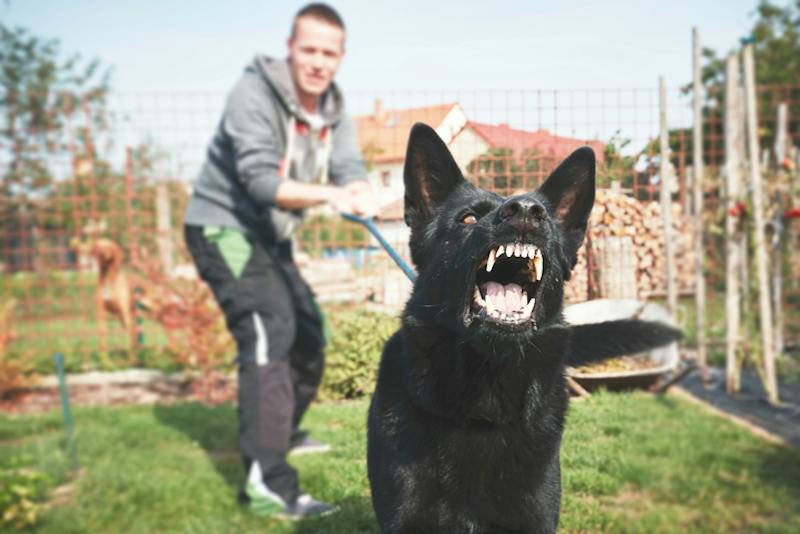
A dangerous dog designation in Nevada is a formal finding by law enforcement or animal control that a dog has shown threatening behavior. For bite victims, a prior designation can be strong evidence that the owner knew about the risk, which may support a negligence claim. Nevada law and Clark County ordinances also distinguish between "dangerous" and "vicious" dogs, and each classification carries different consequences.
Nevada's dog laws are shaped in Carson City as well as in the courtroom. Cogburn Davidson founding partner Jamie Cogburn served as the 2023 President of the Nevada Justice Association and serves as a trustee for Citizens for Justice, where he advocates for Nevadans' rights in the state legislature. This article explains what a dangerous dog designation means, how one is made, and how it may affect a bite victim's claim.
Dangerous Dog vs. Vicious Dog Under Nevada and Clark County Law
Nevada law defines both terms under NRS 202.500:
- Dangerous dog: A dog that, without provocation, behaved menacingly on two separate occasions within 18 months, to a degree that would lead a reasonable person to defend against substantial bodily harm, while off its owner's property or not confined.
- Vicious dog: A dog that, without being provoked, killed or inflicted substantial bodily harm on a person, or continued dangerous behavior after its owner was notified of a dangerous designation.
Clark County's ordinance, which applies in unincorporated areas of the county, uses a broader trigger for a dangerous designation. Under Clark County Code 10.16.010, two bites within 18 months that do not cause substantial bodily harm can support a dangerous designation, even without menacing behavior on both occasions.
The table below compares the state and county definitions:
| Classification | NRS 202.500 (State Law) | Clark County Code 10.16.010 |
|---|---|---|
| Dangerous | Menacing behavior without provocation on two occasions within 18 months while off premises or unconfined, or use in a crime by the owner or keeper | Menacing behavior or a bite without substantial bodily harm on two occasions within 18 months, use in a crime of violence, or causing substantial harm or death to another animal that was at large |
| Vicious | Killing or inflicting substantial bodily harm on a person without provocation, or continued dangerous behavior after notice | Killing or inflicting substantial bodily harm on a person or on another animal not at large, or continued behavior or permit violations after a dangerous declaration |
| Key exceptions | Provocation, meaning the dog was tormented or subjected to pain, or a defensive act against someone committing a crime | Provocation, a person or animal unlawfully on the owner's premises, law enforcement use, or harm the animal did not proximately cause |
| Breed | A dog cannot be found dangerous or vicious based solely on breed | Designations are based on behavior, consistent with state law |
Because a single bite that causes serious injury can qualify a dog as vicious, a victim's own incident may lead to a designation even if the dog had no prior history.
How a Dog Is Designated Dangerous or Vicious After an Incident
A dog is typically designated dangerous or vicious after an animal control officer or law enforcement agency investigates an incident. In unincorporated Clark County, the process often begins with a bite report to Clark County Animal Protection Services, which confirms the bite and places the dog under a 10-day rabies quarantine.
The general process may involve several stages:
- A bite or menacing incident is reported to animal control or law enforcement
- An officer investigates, which may include speaking with the victim, witnesses, and owner, and reviewing prior complaints
- The officer decides whether the facts meet the dangerous or vicious definition and provides notice to the owner or keeper
- Under Clark County Code, the owner of a dog declared dangerous may request a hearing within 72 hours of notice to challenge the determination, and certain requirements may be paused while the hearing is pending
Victims can support an accurate outcome by reporting promptly and giving animal control complete details. The cities of Las Vegas and Henderson have their own animal ordinances, so the process can vary depending on where the incident occurred.
How a Prior Designation Affects a Civil Liability Claim
A prior dangerous or vicious designation can significantly strengthen a civil liability claim, since it may show the owner had notice of the dog's risk. Nevada generally evaluates dog bite claims under negligence principles, as explained in our overview of Nevada's dog bite laws, and an owner's knowledge of prior aggression is often central to whether the owner acted reasonably.
Formal notice connects to specific statutes:
- Under NRS 575.020, a person who knows an animal has vicious or dangerous tendencies and lets it escape or run at large in a way that endangers people commits a misdemeanor, which may support a negligence per se argument if it leads to a bite
- Under NRS 202.500, knowingly keeping a vicious dog for more than seven days after receiving actual notice is separately a misdemeanor
A designation is not required to bring a claim. Leash law violations, unsecured fences, or other evidence of a failure to use reasonable care can also show negligence, and other parties, such as a landlord or caretaker who knew of the designation, may share liability.
Consequences for the Owner vs. What They Mean for Your Case
The consequences an owner faces after a dangerous or vicious designation are largely regulatory and criminal, and they do not by themselves compensate the person who was hurt. The table below summarizes the main consequences under Clark County and state law.
| Consequence | Applies To | Authority |
|---|---|---|
| 10-day rabies quarantine | Any biting dog | Clark County Code Chapter 10.28 |
| Permit with conditions and inspections | Dangerous dogs kept in unincorporated Clark County | Clark County Code Chapter 10.16 |
| Permit revocation | Unprovoked bite or attempted bite, or a permit violation | Clark County Code Chapter 10.16 |
| Impoundment with a 14-day hold | Failure to renew the annual permit | Clark County Code Chapter 10.16 |
| Misdemeanor | Keeping a dangerous animal without a permit, or a vicious dog more than 7 days after notice | NRS 202.500; Clark County Code Chapter 10.16 |
| Category D felony, possible destruction order | Substantial bodily harm from an attack by a known vicious dog | NRS 202.500 |
None of these outcomes cover a victim's medical bills or lost wages. Compensation usually comes from a separate civil claim, which depends on the specific injuries and evidence. A criminal case and a civil claim can occur independently, and a criminal conviction isn't needed for compensation. If a dog is ordered destroyed, prior bite reports and complaints become crucial evidence.
Using Animal Control Records as Evidence in a Dog Bite Claim
Animal control records are often among the most valuable evidence in a Nevada dog bite claim. These records can document the incident itself and reveal whether the dog had a history that the owner knew about.
Records that may be relevant to a dog bite claim include the following:
- The bite report for the incident, including the officer's observations and any statements collected
- Quarantine records and rabies vaccination information
- Prior bite reports or complaints involving the same dog or owner
- Any dangerous or vicious declaration, the notice served on the owner, and hearing records
- Permit applications, inspection results, and records of permit violations
- Licensing and microchip records identifying the owner or keeper
Obtaining these records may require a public records request or, once a lawsuit is filed, a subpoena. Acting early can help, since investigation files and witness recollections are easiest to gather soon after the incident.
Talk to Cogburn Davidson About a Dangerous Dog Bite Case
When a dog with a known history injures someone, a detailed review of animal control files and the owner's knowledge can make a meaningful difference. Cogburn Davidson partner Hunter Davidson frequently appears before the Nevada Supreme Court, and those appearances have resulted in several published decisions. Our firm's results in premises and negligence cases include a $2.3 million slip-and-fall recovery.
If a dog bit you with a prior history, or by a dog that may be designated dangerous after your attack, call (702) 805-0652 to schedule a case evaluation with a dog bite attorney in Nevada at our Las Vegas or Henderson office.
Disclaimer: This article is for informational purposes only and is not legal advice. Dog bite law in Nevada is highly nuanced, and every case should be evaluated individually based on its specific facts.
Sources
- NRS 202.500, Nevada Legislature
- NRS 575.020, Nevada Legislature
- Clark County Code 10.16.010, Dangerous and Vicious Animal Declaration, Clark County
- Clark County Code Chapter 10.16, Dangerous Animals, Clark County
- Frequently Asked Questions, Clark County Animal Protection Services