
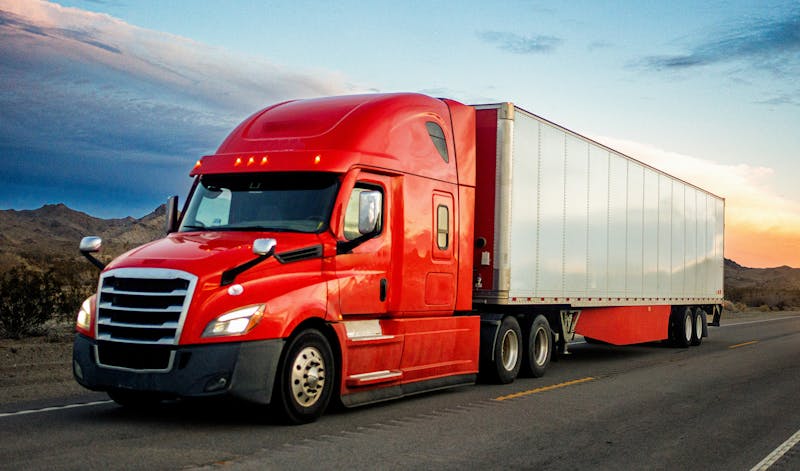
Large truck crashes are not ordinary collisions. They involve overlapping state and federal regulations, corporate defendants, and high-stakes insurance defense teams.
At Cogburn Davidson Injury Lawyers, we prepare every trucking case as if it will be tried before a jury. Jamie Cogburn is one of only 19 Certified Personal Injury Specialists in Nevada, and our team has handled catastrophic injury and wrongful death cases across the state. When a commercial carrier deploys investigators within hours, you need attorneys who understand both Nevada traffic law and the federal safety rules governing interstate trucking.
This guide breaks down the laws, liability standards, regulatory overlap, and practical steps that matter most after a serious truck accident in Nevada.
Nevada Traffic Laws and Federal Trucking Regulations: How They Work Together
Both state traffic statutes and federal safety regulations govern large truck crashes in Nevada.
Nevada traffic rules are primarily found in Title 43 of the Nevada Revised Statutes. Key provisions include:
- Speed restrictions (NRS Chapter 484B)
- Reckless driving (NRS 484B.653)
- Following too closely (NRS 484B.127)
- Duties after a crash (NRS 484E)
These laws apply to all drivers, including commercial operators.
Nevada also adopts federal motor carrier safety standards under NRS 706.171, which incorporates federal regulations for motor carriers operating in the state.
Commercial trucks operating in interstate commerce must comply with the Federal Motor Carrier Safety Regulations (FMCSRs), enforced by the Federal Motor Carrier Safety Administration (FMCSA).
These regulations cover:
- Hours-of-service limits (49 CFR § 395)
- Driver qualifications (49 CFR § 391)
- Vehicle inspection and maintenance (49 CFR § 396)
- Drug and alcohol testing (49 CFR § 382)
In many truck crash cases:
- A driver may violate Nevada traffic law (e.g., speeding).
- The same driver may also violate federal hours-of-service limits.
- The trucking company may violate federal maintenance or supervision rules.
When federal violations occur, they often strengthen negligence claims by demonstrating a failure to meet nationally mandated safety standards.
Liability in Nevada Large Truck Accidents
Nevada follows a modified comparative negligence rule under NRS 41.141. This means an injured person can recover damages so long as they are not more than 50% at fault, as their percentage of fault reduces the amount recovered.
Depending on the facts, liable parties may include:
- The truck driver
- The trucking company (motor carrier)
- A freight broker
- A vehicle maintenance contractor
- A trailer owner
- A cargo loading company
- A manufacturer of defective parts
- A governmental entity (in road design cases)
Trucking companies are often liable under:
- Respondeat superior (employer responsibility)
- Negligent hiring
- Negligent training
- Negligent supervision
- Failure to maintain equipment
Critical Evidence in Truck Cases
Truck litigation is evidence-intensive. Key evidence may include:
- Electronic logging device (ELD) data
- Driver qualification files
- Dispatch communications
- Maintenance and inspection records
- Event data recorder (“black box”) downloads
- Drug and alcohol testing records
- Bills of lading and cargo manifests
- Surveillance footage
- Nevada Highway Patrol reports
The FMCSA requires carriers to maintain specific safety records under 49 CFR § 390–399. Failure to preserve these records can significantly impact liability findings.
Cause-and-Effect Breakdown of Common Truck Accident Factors
1. Driver Fatigue
Cause: Violation of hours-of-service rules (49 CFR § 395 limits driving time and mandates rest periods). FMCSA HOS rules are designed to prevent fatigue-related crashes.
Effect:
- Delayed reaction time
- Lane drift
- Microsleep episodes
- Rear-end collisions
- Run-off-road crashes
2. Mechanical Failures
Cause: Failure to inspect, repair, and maintain equipment under 49 CFR § 396. Brake violations are among the most common out-of-service findings in roadside inspections.
Effect:
- Brake failure on downhill grades
- Tire blowouts
- Steering system malfunction
- Loss-of-control incidents
3. Improper Cargo Loading
Cause: Failure to comply with cargo securement rules under 49 CFR § 393.
Effect:
- Load shifts
- Rollover crashes
- Falling debris hazards
- Jackknife incidents
4. Distracted or Impaired Driving
Commercial drivers are subject to strict drug and alcohol testing requirements under 49 CFR Part 382. Impairment dramatically increases stopping distance and crash severity in vehicles that can weigh up to 80,000 pounds when fully loaded.
What To Do After a Large Truck Accident in Nevada
Immediate Steps
- Call 911 and request emergency response
- Seek immediate medical treatment
- Ensure a police report is created
- Photograph vehicles, skid marks, and road conditions
- Identify witnesses
Before Speaking to Insurers
- Do not give a recorded statement
- Do not sign medical authorizations
- Avoid posting about the crash on social media
Protecting Legal Rights
- Preserve medical records and receipts
- Keep documentation of missed work
- Contact a truck accident attorney
- Ensure preservation letters are sent to prevent destruction of ELD and maintenance data
- Under Nevada law, there are time limits to file injury claims
- The statute of limitations for most personal injury actions is found under NRS 11.190
Compensation and Case Valuation in Nevada Truck Accidents
Nevada allows economic and non-economic damages, depending on the specifics of your case.
Economic damages include:
- Emergency care and hospitalization
- Surgeries
- Physical therapy
- Future medical treatment
- Lost wages
- Loss of earning capacity
- Property damage
An example would be a 45-year-old construction worker who suffers spinal injuries requiring surgery and cannot return to work. Lifetime earning losses could exceed seven figures when actuarial projections are applied.
Non-economic damages include:
- Pain and suffering
- Emotional distress
- Loss of enjoyment of life
- Loss of consortium
In cases involving reckless conduct, Nevada allows punitive damages under NRS 42.005. These may apply when a trucking company knowingly violates safety regulations.
If a truck accident results in death, Nevada’s wrongful death statute is found at NRS 41.085. Surviving family members may pursue damages for funeral costs, financial support, and loss of companionship.
Protect Your Rights Under Nevada’s Trucking Laws
Understanding Nevada traffic laws regarding large truck accidents is only part of the equation. Enforcing them, especially against commercial carriers and their insurers, requires courtroom experience, regulatory knowledge, and the willingness to push a case as far as necessary.
At Cogburn Davidson Injury Lawyers, truck litigation is not handled by case managers or passed off for quick resolution. Our team includes attorneys who have argued before the Nevada Supreme Court, secured multimillion-dollar recoveries, and taken complex injury cases through verdict.
We also understand that no two truck accidents—and no two clients—are alike. That’s why we take a limited number of cases and work closely with each family we represent. From sending immediate preservation letters to analyzing federal safety violations, we build cases methodically and personally.
If you or a loved one has been injured in a crash involving a large commercial truck, you do not have to face corporate carriers or their insurers alone. We offer free consultations, and you pay nothing unless we recover compensation on your behalf.
The sooner we get involved, the sooner we can begin protecting your rights under Nevada law. Contact us today.
Frequently Asked Questions About Nevada Large Truck Accidents
Are trucking companies required to carry higher insurance coverage than regular drivers?
Yes. Federal law requires most interstate motor carriers to carry minimum levels of liability insurance significantly higher than private passenger vehicles. Under 49 CFR § 387.9, many for-hire motor carriers transporting non-hazardous freight must carry at least $750,000 in liability coverage, with higher limits required for hazardous materials. Higher policy limits often mean more aggressive defense strategies from insurers.
Does Nevada have special lane or route restrictions for large trucks?
Yes. Nevada law and transportation regulations may restrict certain oversized or overweight vehicles from specific routes without permits. The Nevada Department of Transportation (NDOT) regulates oversize and overweight permits and designated routes. Operating outside permitted limits can be evidence of regulatory noncompliance.
How does black ice or desert weather affect truck accident liability?
Nevada’s varied terrain—from mountain passes to desert highways—creates unique hazards. While weather conditions can contribute to crashes, commercial drivers are still expected to adjust speed and operation based on road conditions under Nevada’s basic speed law (NRS 484B.600). Commercial drivers are trained to reduce speed and increase stopping distance in adverse conditions. Failure to do so may still constitute negligence.
Are trucking companies required to conduct background checks on drivers?
Yes. Federal regulations require motor carriers to investigate a driver’s employment history and safety record before hiring under 49 CFR § 391.23. Failure to properly vet a driver can form the basis of a negligent hiring claim.
Can a trucking company be liable if the driver is labeled an “independent contractor”?
Possibly. Many carriers classify drivers as independent contractors, but liability depends on control and regulatory structure. Federal motor carrier regulations require authorized carriers to maintain responsibility for equipment and drivers operating under their authority. Courts often analyze whether the carrier exercised operational control, regardless of contract labels.
What is the difference between interstate and intrastate trucking?
Interstate trucking crosses state lines and is subject to federal FMCSA oversight
Intrastate trucking occurs entirely within Nevada and may still incorporate federal standards through state adoption
The distinction can affect jurisdiction, regulatory compliance obligations, and insurance requirements
How are truck accident investigations different from car accident investigations?
Truck crash investigations frequently involve:
- Federal regulatory compliance reviews
- Reconstruction experts
- Electronic control module downloads
- Company safety audits
- Fleet maintenance histories
Can a truck driver’s logbook be falsified?
Before electronic logging devices (ELDs) became mandatory, paper logs were more easily manipulated. While ELDs are now required for most carriers under 49 CFR § 395.8, falsification can still occur through improper inputs or tampering. Comparing log data with GPS, toll records, fuel receipts, and dispatch communications can reveal inconsistencies.
How long must trucking companies keep safety and maintenance records?
Federal regulations require different retention periods depending on the document type. For example:
- Driver qualification files must be maintained while employed and for three years after separation (49 CFR § 391.51)
- Hours-of-service records must generally be retained for at least six months (49 CFR § 395.8)
Do federal weight limits apply in Nevada?
Yes. Federal law generally limits interstate commercial vehicles to 80,000 pounds gross vehicle weight, subject to exceptions. Nevada also enforces its own weight and size regulations consistent with federal highway standards. Overloaded trucks can increase stopping distance and strain braking systems.
What happens if the trucking company is based out of state?
Many trucking companies involved in Nevada crashes are headquartered elsewhere. That does not prevent a lawsuit in Nevada if the crash occurred here. Nevada courts generally have jurisdiction over accidents occurring within the state. Out-of-state carriers operating in Nevada must comply with Nevada law and federal safety standards while using Nevada roadways.
Are government entities ever responsible for truck accidents?
In limited circumstances, yes. Poor road design, missing signage, or improperly maintained highways can contribute to collisions. Claims against government entities are subject to special procedural rules and limitations under Nevada law. Because government claims often have strict notice requirements, early evaluation is important.